
How to Use Golf Alignment Sticks: 7 Drills for Better Practice
Golf alignment sticks are simple, but that is exactly why they work. They give you a clear visual reference so you can see whether your setup, ball position and practice patterns match what you intend.
You do not need a complicated training system to get value from them. A pair of sticks can cover most of the fundamentals golfers work on at the range.
Below are seven practical ways to use golf alignment sticks during practice. Start with the first three, then add the others as needed.
1. Target-Line Alignment Drill
What it works on: aim and setup.
Place one alignment stick on the ground a few feet in front of the ball, pointing directly at your target. Set the clubface first, then build your stance around it.
The goal is to separate where the clubface is aimed from where your body is aligned. Many golfers unintentionally aim their feet directly at the target, which can make the rest of the setup look closed or open.
Hit a few shots, step away, then reset rather than leaving your feet in the same place for every ball.
2. Railroad-Track Stance Drill
What it works on: feet, hips and shoulder alignment.
Lay one stick along the target line outside the ball. Place a second stick parallel to it along your toe line.
Think of the two sticks as railroad tracks: the ball-side track points toward the target while the body-side track runs parallel to it.
This gives you an immediate reference for whether your stance is drifting open or closed.
3. Ball-Position T Drill
What it works on: consistent ball position.
Place one alignment stick along your toe line. Position the second stick perpendicular to it so the two sticks form a T.
Use the perpendicular stick as a reference for the ball.
For example, you can establish a repeatable position for wedges and short irons, then gradually move the reference forward as clubs get longer. The purpose is not to force every golfer into one exact ball position. It is to help you recognize where you are actually placing the ball.
4. Swing-Path Corridor Drill
What it works on: awareness of the club's direction through impact.
Place two sticks on the ground to create a wide corridor around your intended swing path. Keep them far enough from the ball that there is no chance of striking them during the swing.
Hit short, controlled shots while using the corridor as a visual reference. If your club is traveling dramatically across the corridor, you have immediate feedback about the direction of the motion.
Start slowly. The goal is awareness, not forcing the club into a perfectly straight path.
5. Takeaway Reference Drill
What it works on: the first part of the backswing.
Lay a stick on the ground just outside the ball and approximately parallel to your target line.
During slow rehearsals, watch how the clubhead moves relative to the stick during the first part of the takeaway. It gives you a simple visual reference for whether the club is moving dramatically inside or outside early in the backswing.
Use this primarily for rehearsals rather than trying to stare at the stick during a full-speed swing.
6. Putting Start-Line Gate
What it works on: putter alignment and start direction.
Place two alignment sticks parallel to each other on the putting green, creating a channel slightly wider than your putter head.
Set a ball in the middle and roll putts through the channel. This makes it easier to see whether the putter is consistently returning through the same general area.
You can also use a single stick behind the ball as an alignment reference when practicing short putts.
7. Chipping Start-Line Drill
What it works on: setup and initial direction around the green.
Place one stick on the ground pointing toward your intended landing spot. Position the second stick along your foot line.
Hit short chips while checking whether your clubface and body are organized around the same intended shot.
Move the landing target after several shots so you are practicing different trajectories rather than simply repeating one setup.
How Many Alignment Sticks Do You Need?
One stick can help with aim and ball position, but two are much more useful. A pair lets you create parallel lines, perpendicular references and practice corridors without constantly repositioning the same stick.
That is why most Hazy Golf alignment sticks are sold as a pair.
How to Get More From Alignment-Stick Practice
- Reset often. Step away from the ball and rebuild your setup instead of hitting shot after shot from the same stance.
- Practice at partial speed first. Visual references are easier to understand when you are not immediately swinging at full speed.
- Use the sticks as feedback, not a rule. Alignment sticks show you what you are doing. They do not prescribe one swing pattern for every golfer.
- Keep sticks clear of the clubhead. When using them for swing-path drills, position them safely outside the area the club can contact.
- Remove the aid periodically. Alternate between practice with the sticks and shots without them to see whether the setup carries over.
Do Alignment Sticks Actually Help?
They can be useful because they make invisible things visible. Without a reference, it can be difficult to know whether your feet are open, your ball has crept too far forward or your intended target line has shifted.
The sticks do not fix a swing on their own. Their value is in providing a consistent reference while you practice.
Choosing a Pair of Golf Alignment Sticks
If you are deciding between fiberglass, collapsible or wooden alignment sticks, we put together a separate guide explaining the differences.
Read our guide to choosing the best golf alignment sticks.
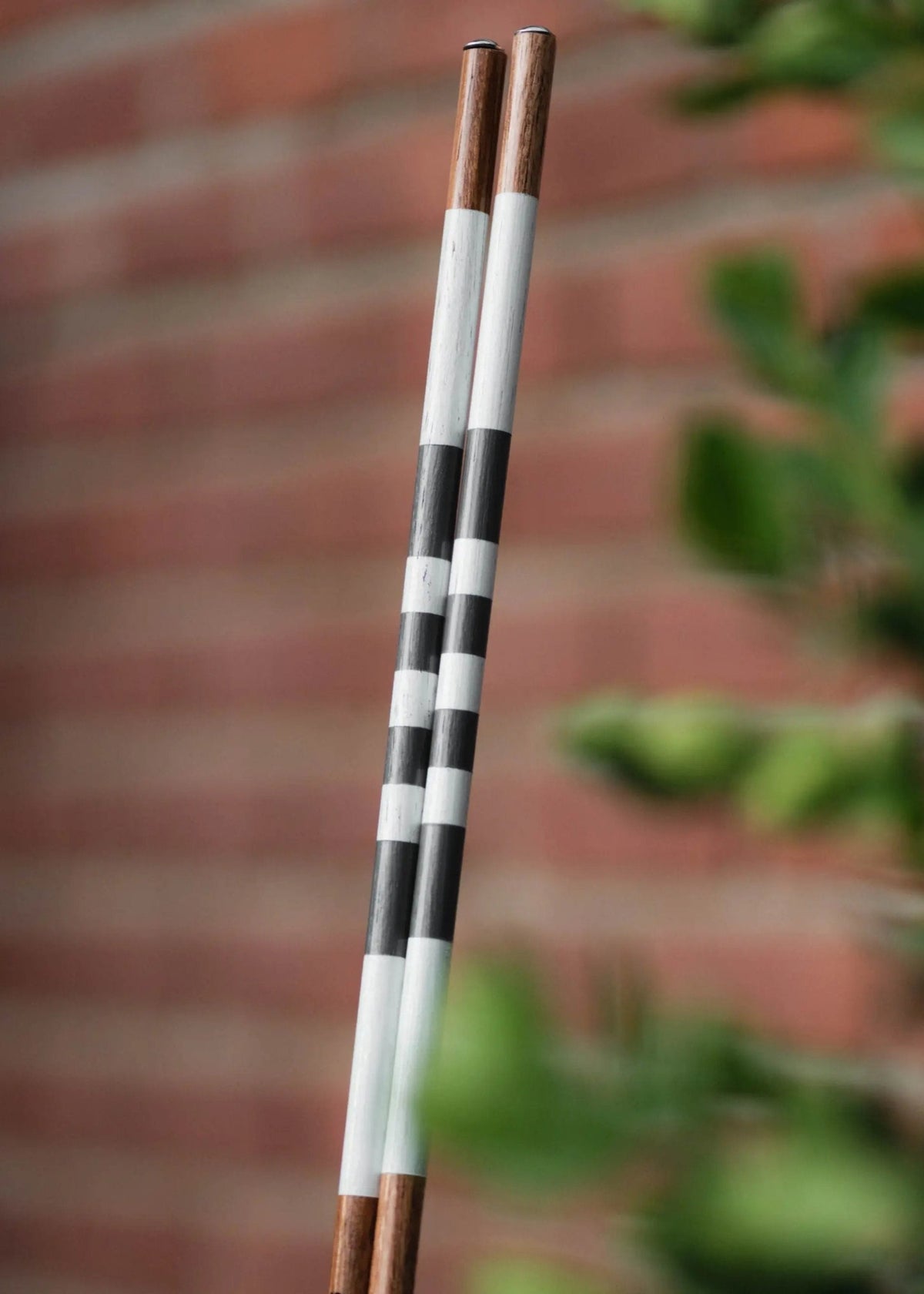
If you prefer a handcrafted option, explore the Hazy Golf Core Collection of genuine hickory golf alignment sticks. If you want your own colors or personalization, visit Design Your Own.
Frequently Asked Questions
What is the easiest alignment-stick drill for beginners?
Start with one stick parallel to your target line and use it to check your setup before each shot. Once that feels comfortable, add a second stick along your feet.
Can alignment sticks help with ball position?
Yes. Creating a T with two sticks gives you a repeatable reference for where the ball sits within your stance.
Can you use alignment sticks for putting?
Yes. Two sticks can create a channel around the putter, while one stick can serve as a start-line or setup reference.
Should alignment sticks touch the golf ball?
No. Give yourself enough space to swing and strike the ball normally. Any stick used near the swing path should remain safely outside the area the club can contact.
Do I need expensive alignment sticks to do these drills?
No. The drills work because the sticks provide a straight visual reference. Material and finish mainly affect appearance, feel, durability and personalization.