Article: Hickory vs. Fiberglass Golf Alignment Sticks: Which Is Right for You?
Hickory vs. Fiberglass Golf Alignment Sticks: Which Is Right for You?
Golf alignment sticks all serve the same basic purpose: they give you a clear visual reference for aim, setup, ball position and swing-path work. The biggest difference is what they are made from, how they feel in the bag and how much customization you want.
For most golfers, the choice comes down to two common materials: fiberglass and hickory. Both can work perfectly well for practice. The better option depends on what you value.
Hickory vs. Fiberglass at a Glance
| Feature | Hickory | Fiberglass |
|---|---|---|
| Practice function | Excellent | Excellent |
| Appearance | Natural, traditional, premium | Bright, simple, utilitarian |
| Customization | Well suited to paint, engraving and logos | Usually limited |
| Weight and feel | More substantial, natural feel | Typically lighter |
| Price | Usually higher | Usually lower |
| Best fit | Golfers, gifts, clubs and custom projects | Low-cost, straightforward training use |
Do Hickory Alignment Sticks Improve Your Swing?
No material will improve a golf swing on its own. Hickory does not create better mechanics than fiberglass, and fiberglass does not make a drill less effective.
The value of any alignment stick comes from how consistently you use it. A pair can help you establish a target line, check your feet and shoulders, monitor ball position or create a swing-path reference. Those benefits come from the drill and the feedback, not the material.
If you want examples, see our 7 alignment-stick drills for better practice.
Why Choose Fiberglass Golf Alignment Sticks?
Fiberglass sticks are popular for good reason. They are inexpensive, lightweight, easy to find and fully capable of doing the basic job.
They can be a smart choice if:
- You simply want the lowest-cost way to add alignment references to practice.
- You plan to keep a pair at home, in a teaching bay or in a practice station.
- Appearance and personalization are not important to you.
- You want bright colors that are easy to see against grass.
For a golfer focused only on function, fiberglass can be all that is needed.
Why Choose Hickory Golf Alignment Sticks?
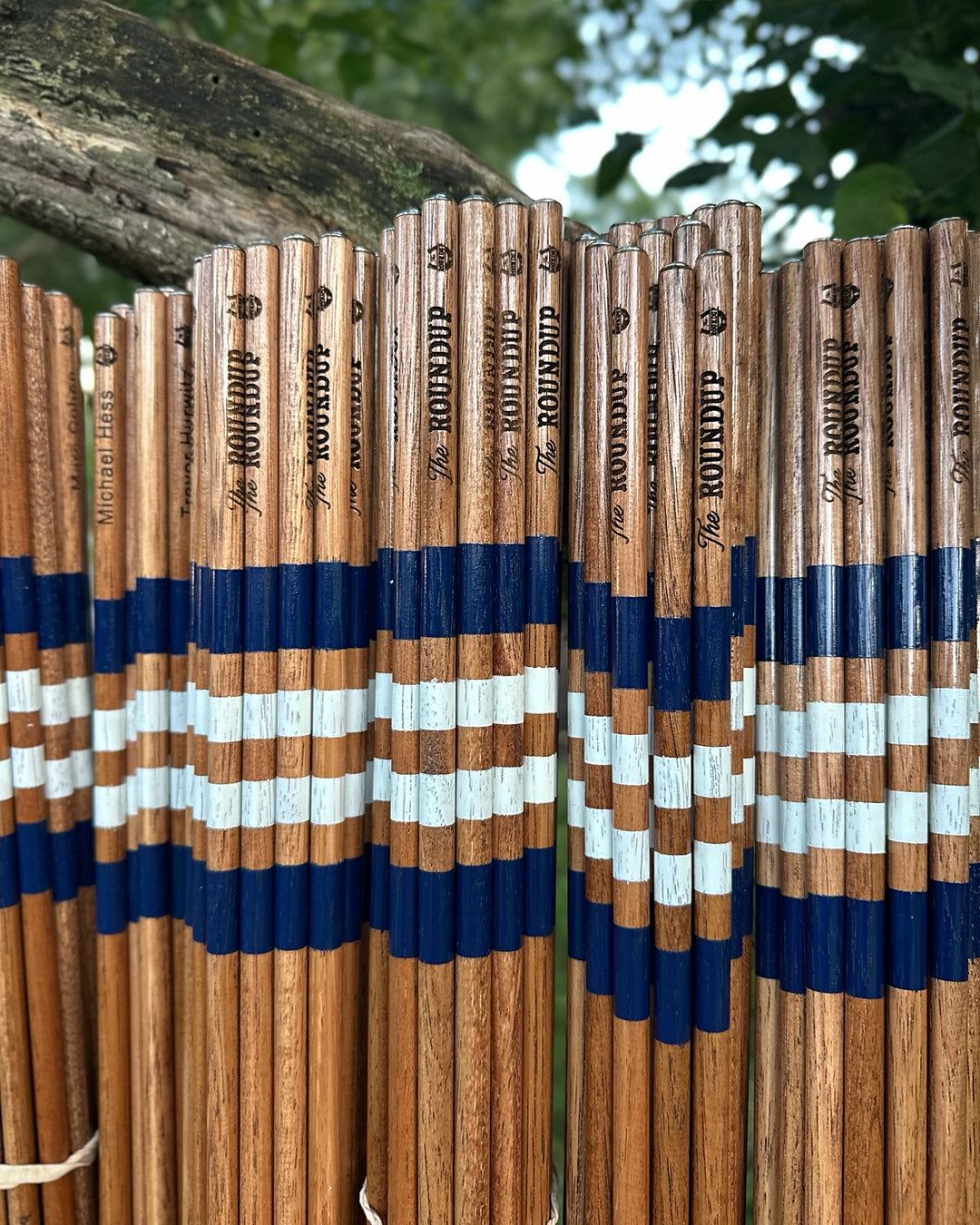
Hickory serves the same training purpose but approaches the product differently. Instead of looking like generic practice rods, the wood grain becomes part of the finished design.
Hickory is especially appealing when you care about:
- Appearance: Natural grain and painted details create a more traditional golf aesthetic.
- Personalization: Wood provides a natural surface for engraving names, initials and custom marks.
- Custom colors and logos: Club colors, stripe treatments and branding can be incorporated into the design.
- Giftability: A finished pair can feel more like a golf accessory or keepsake than basic training equipment.
- Club programs: Country clubs, tournaments and pro shops can build designs around their own visual identity.
At Hazy Golf, our Core alignment sticks are made from genuine hickory, measure 43 inches long and are finished by hand in New York. You can shop hickory golf alignment sticks here.
What About Durability?
Both materials have tradeoffs. Fiberglass is designed to be light and practical, while wood is a natural material with variation in grain and character.
Alignment sticks also are not intended to be struck directly by the club. Whichever material you choose, keep them clear of the impact area during full-speed swings and use them as visual references rather than targets for the clubhead.
For normal range use, storage and transport, either material can work well when treated appropriately.
Which Material Feels Better in the Bag?
This is mostly preference. Fiberglass is usually lighter and more utilitarian. Hickory has more visual and tactile character because each piece of wood has its own grain.
Some golfers simply prefer equipment that feels coordinated with the rest of the bag. Others could not care less what their alignment sticks look like. Neither approach is wrong.
Are Hickory Alignment Sticks Worth the Extra Cost?
If all you need is a straight reference line on the ground, inexpensive fiberglass sticks can accomplish that.
Hickory makes more sense when the design, finish, personalization or gifting value matters in addition to the training function. That is why it is often a strong fit for golfers who want a more finished product, personalized gifts, country clubs, member-guests and tournament programs.
For a broader buying comparison, read what to look for when buying golf alignment sticks.
Can Hickory Alignment Sticks Be Personalized?
Yes. One advantage of wood is the ability to combine natural hickory with painted patterns and engraving.
Hazy Golf offers custom options for individual golfers through Design Your Own, while clubs, tournaments and companies can explore larger custom-logo projects through our Tournaments & Clubs program.
So, Which Should You Buy?
Choose fiberglass if you want a simple, inexpensive training aid and do not care much about materials, finish or personalization.
Choose hickory if you want the same basic training function with natural wood, a more refined appearance and more options for color, engraving or club-specific design.
The most important part is still using them. A well-designed practice station with either material is more valuable than an expensive pair that never leaves the bag.
Frequently Asked Questions
Are wooden golf alignment sticks better than fiberglass?
Not automatically for swing improvement. Both can provide the same visual references during practice. Wooden sticks primarily differ in material, appearance, feel and customization options.
How long should golf alignment sticks be?
Many golf-specific alignment sticks are around 43 inches long. Hazy Golf's standard hickory sticks are 43 inches long with a 3/8-inch diameter.
Do I need one alignment stick or two?
Two sticks give you more setup options. You can create parallel lines, a ball-position T, a swing-path corridor or putting gates. One stick still works well for basic target-line practice.
Can I use driveway markers instead?
Yes. Straight driveway markers can serve as inexpensive visual references for many golf drills. Golf-specific alignment sticks mainly add purpose-built dimensions, finishing and, depending on the product, more design and personalization options.